Serving All 5 NYC Boroughs  ·  Placement Assessment  ·  Managed Service  ·  Get a Free Quote →
NYC Vending Services
Five boroughs · 50+ people on site

New York City vending machines,
planned around the building

Hospitals, distribution centers, campuses, and office towers — not a copied city template. Eligible workplaces can qualify for no-cost equipment placement; products and employer-funded programs are quoted separately.

Request a Free Site Visit →See Our Services
ManhattanBrooklynQueensThe BronxStaten Island
5NYC Boroughs
50+People on site
COIFreight & dock first
NYCNot a network clone

Machines that survive a New York restock day

We keep one strong vending page instead of a stack of look-alike service URLs. Micro markets and pantry programs are scoped on the visit when the room can support them.

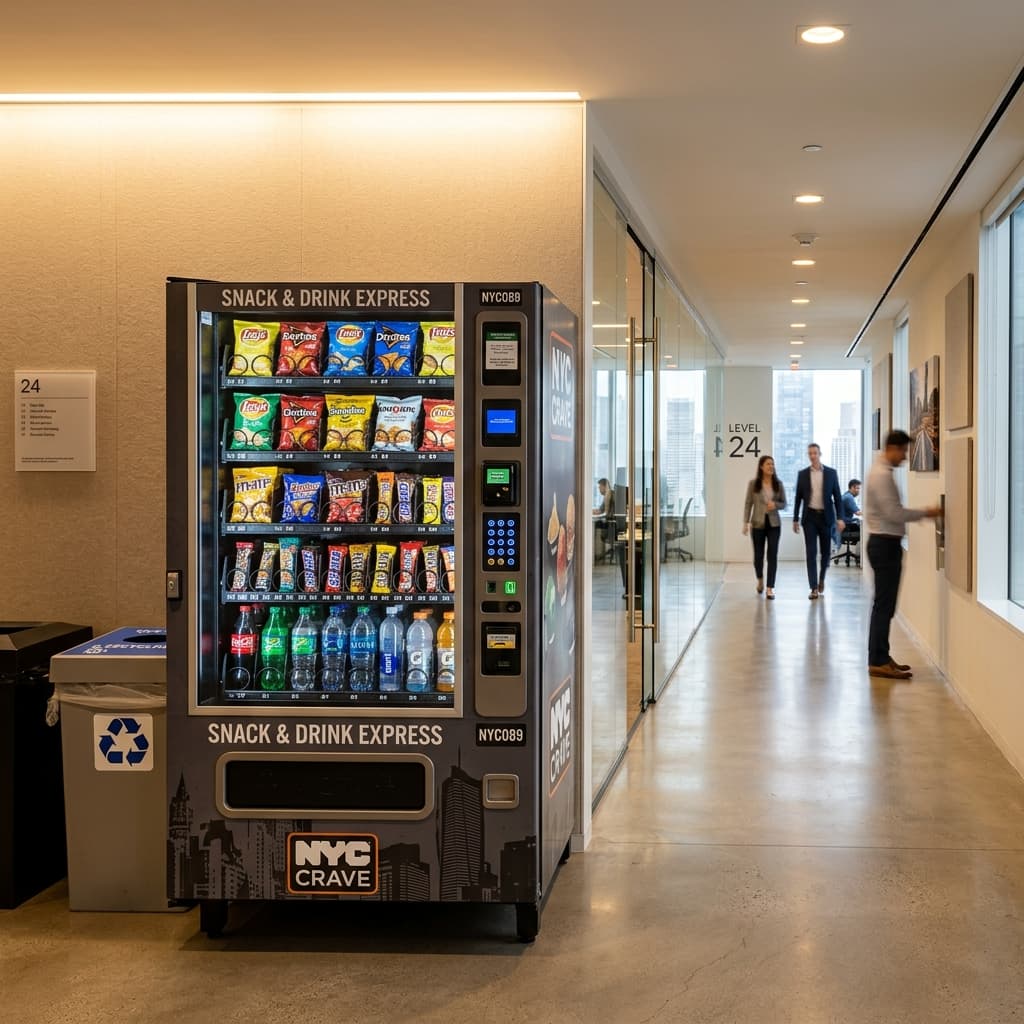
Snack and drink machinesCore service

Snack and drink machines

Contained machines for hospital lounges, warehouse breakrooms, campus staff floors, and office towers. Cashless payment, restocking, and repairs are part of an eligible placement — products are not free.

NYC vending details →
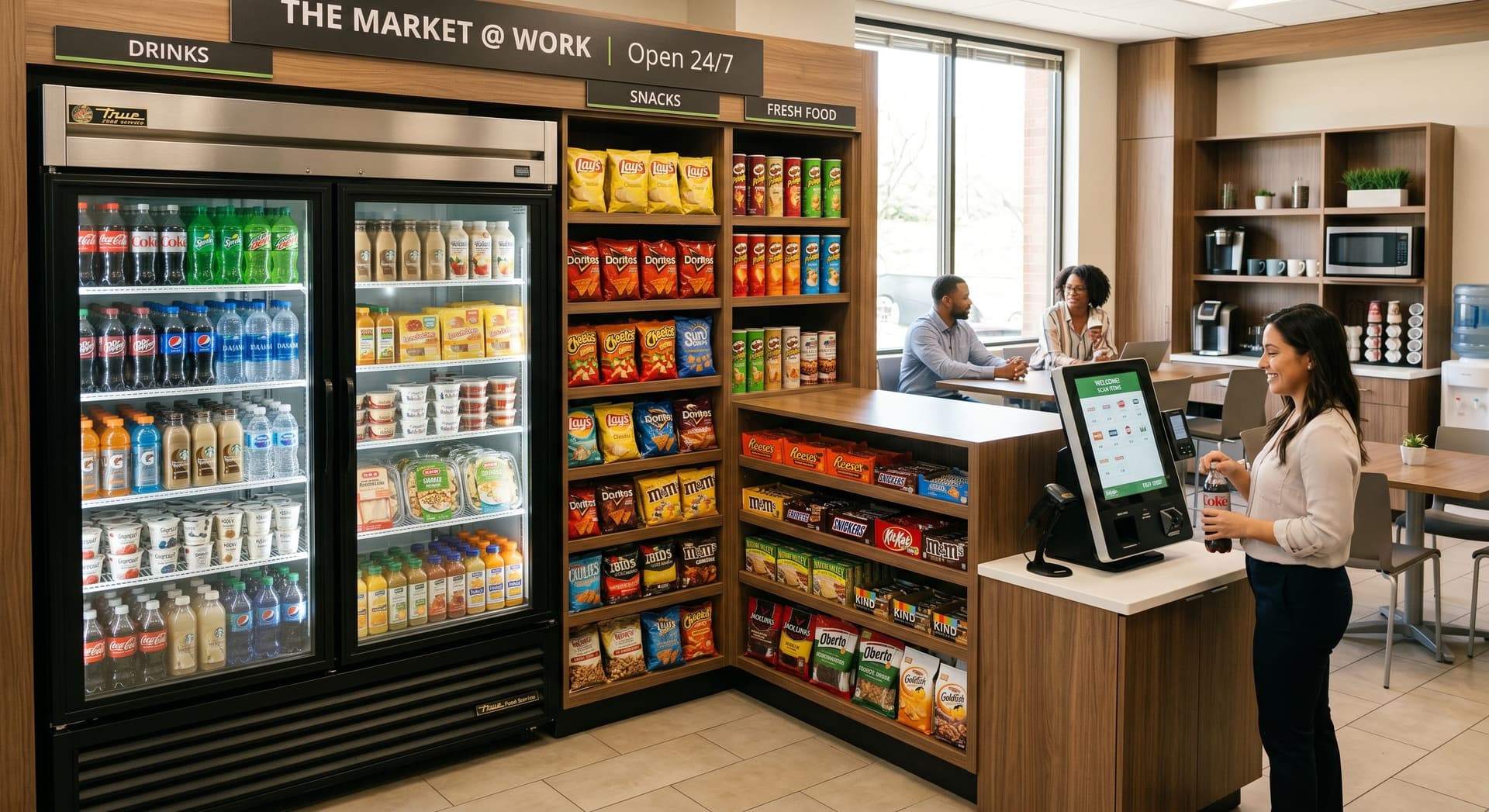
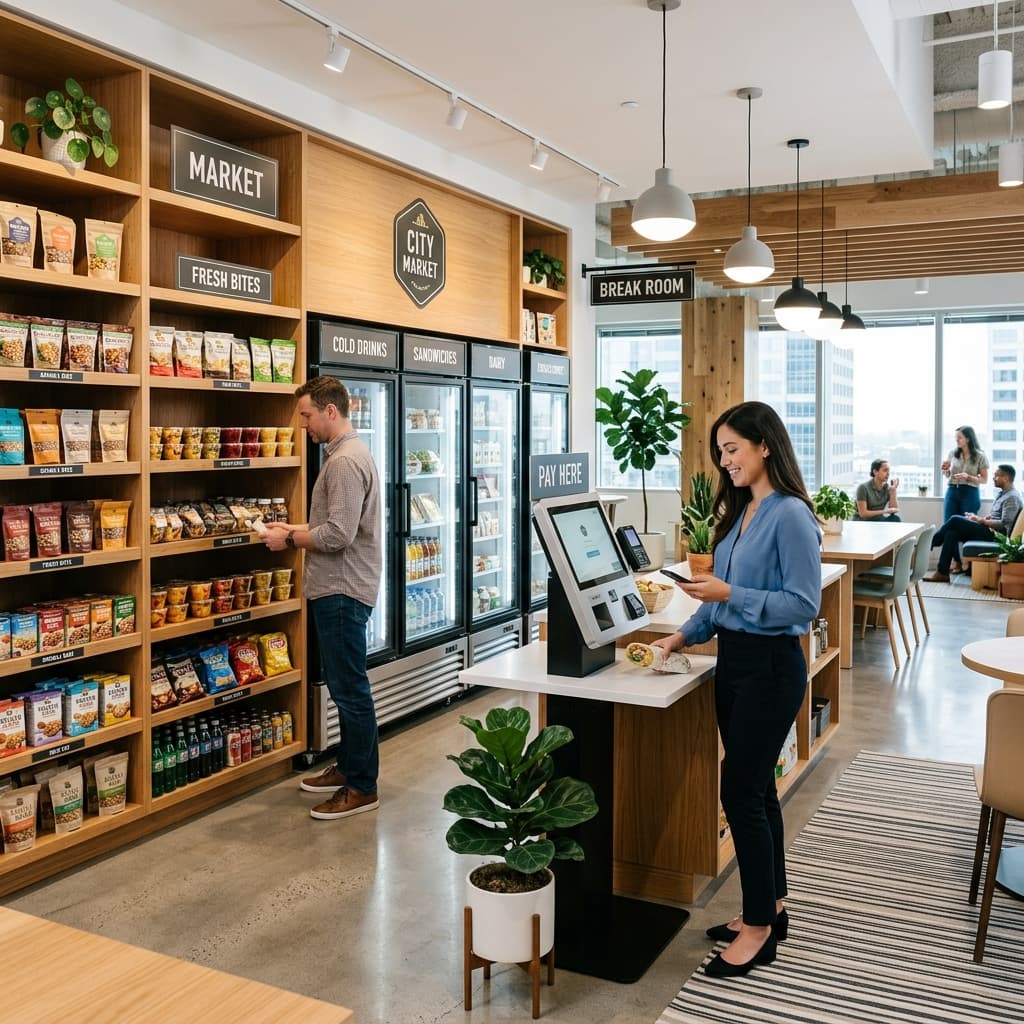
Micro markets

Micro markets

Open shelves and coolers with self-checkout, only where a 50+ workplace has space, security, and a cleaning plan. Discussed on the assessment; not a separate thin landing page.

Ask about this format →
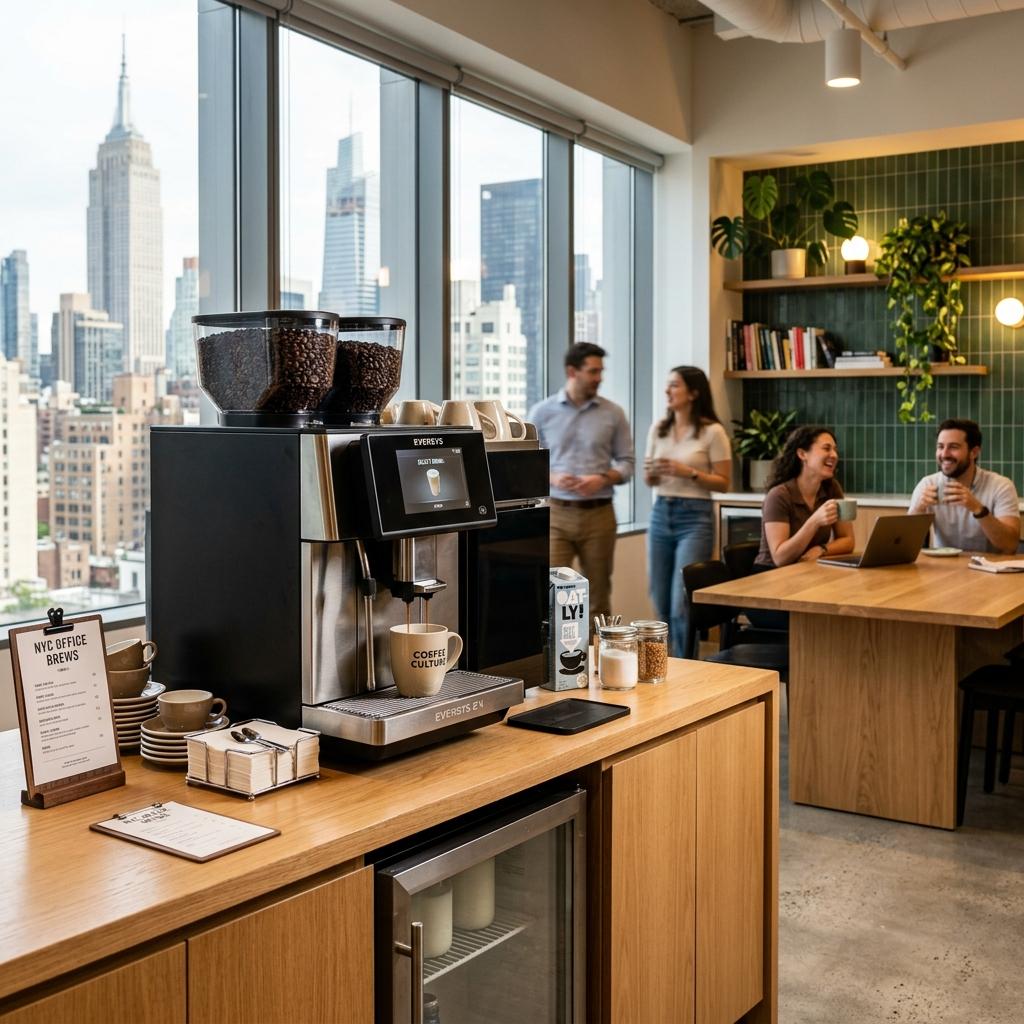
Coffee and pantry programs

Coffee and pantry programs

Employer-funded coffee or open pantry service is a product purchase, not free placement. Quoted separately after we know headcount and building utilities.

Ask about this format →

Built for New York operations teams

If your facilities manager already knows the freight hours, you are the reader this page is for.

01

50+ on site

Hospitals, distribution centers, campuses, and office towers. We do not chase thin neighborhood pages or 12-person suites.

02

Building access first

COI, freight cab, dock window, and union or landlord rules are checked before anyone promises an install week.

03

Five-borough routes

Manhattan high-rises, Brooklyn industrial campuses, Queens cargo, Bronx markets, and Staten Island hospitals are planned as themselves.

04

Clear money talk

Eligible sites may get no-cost equipment placement. Products, pantry programs, and extra building work are quoted separately. No prices on this site.

Three steps that respect the building

Timing depends on freight bookings and insurance approval, not a stock promise of “next week.”

01
01

Tell us the building

Borough, attendance of 50 or more, dock or freight notes, and whether the landlord already has a vendor process.

02
02

Walk the path

We check the cab, the turn, power, and who signs the COI. No install date until the building says the vendor is approved.

03
03

Place and restock

Equipment goes in on freight. Restocks follow the dock calendar. You get written terms for placement versus product payment.

Clear answers for workplace managers

Who pays for products in NYC?

Employees usually pay for vending purchases. Employer-funded coffee, pantry, and subsidies are quoted separately. No prices are listed on this site.

Does every New York workplace qualify?

We look for hospitals, distribution centers, campuses, and office towers with 50 or more people on site. Thin neighborhood storefronts are not a fit.

What should a facilities team prepare?

Bring typical attendance, COI contacts, freight-elevator hours, dock rules, and the path from the dock to the breakroom.

Read the NYC Planning Guide →

Local workplaces, not interchangeable city pages

Each borough has different docks, hospitals, and industrial campuses. The summaries below are sourced; the full guides keep the URLs that already exist. If you are comparing operators, the Vending Locator also keeps a New York vending services overview.

Manhattan

Manhattan placements are building-operations problems first. High-rises with 50 or more people on a floor still fail if the freight cab is too small, the COI is wrong, or the dock only takes one trip before 8 a.m.

Where 50+ people actually work: Hospital systems, Class A office towers, university medical campuses, and large law and finance floors.

Open the Manhattan guide →

Brooklyn

Brooklyn demand sits on industrial campuses and hospital floors more than on brownstone storefronts. The Navy Yard, Brooklyn Army Terminal, and public hospitals are the kind of 50+ workplaces a restock route can support.

Where 50+ people actually work: Urban manufacturing, food production, garment and climate-tech shops, hospital campuses, and Downtown Brooklyn offices.

Open the Brooklyn guide →

Queens

Queens is where airport cargo, hospital night shifts, and Long Island City office towers sit on the same restock map. The constraint is usually airside or dock security, not a lack of people.

Where 50+ people actually work: Air cargo and airport logistics, hospital systems, LIC office and industrial lofts, and food distribution along industrial corridors.

Open the Queens guide →

The Bronx

The Bronx still runs on food distribution and hospital systems. Hunts Point and Montefiore are not “neighborhood vending” stories — they are shift-based campuses with docks, refrigeration, and overnight crews.

Where 50+ people actually work: Wholesale food distribution, hospitals and medical education, university campuses, and industrial IBZ employers.

Open the The Bronx guide →

Staten Island

Staten Island is not a Manhattan overflow route. Hospital campuses and North Shore industrial sites are the workplaces with enough daily attendance to support a machine without pretending every parish office qualifies.

Where 50+ people actually work: Hospital campuses, North Shore warehousing and manufacturing, St. George civic offices, and college campuses.

Open the Staten Island guide →

Freight, COIs, docks, and union buildings

A machine that looks fine in a catalog still has to fit the cab, clear the turn, and be accepted by the property manager. These rules come from how New York buildings actually receive vendors.

Certificates of insurance

Manhattan and other Class A buildings routinely refuse the dock until a COI is on file, with the owner and manager named as additional insured. Limits and endorsements are set by that building, not by a citywide template.

Freight elevators

Vending equipment travels on freight. Buildings book cabs in advance, limit free hours, and charge overtime for nights and weekends. Passenger elevators are not a workaround.

Loading docks and service entrances

Vendors are sent to the dock or service entrance, often with ID checks and a 20-minute dwell limit. Pallet deliveries usually need a tenant waiting in the dock. Lobby drop-offs get turned away.

Union and landlord rules

Some NYC buildings are union buildings and require union labor for moves or building work. Landlords also control vendor lists, floor protection, and whether restocks can happen during tenant hours.

Off-hour deliveries

NYC DOT’s Off-Hour Delivery Program encourages 7 p.m. to 6 a.m. receiving in Midtown, Lower Manhattan, Downtown Brooklyn, and Jamaica. It does not override a building that closes its dock at 6 p.m.

NYC vending questions

Which workplaces do you actually serve in New York City?

Hospitals, distribution centers, campuses, and office towers where 50 or more people are on site. Smaller storefronts and private apartments are not a fit.

Do you cover all five boroughs?

Yes — Manhattan, Brooklyn, Queens, the Bronx, and Staten Island. Restocking is planned around each building’s freight and dock rules, not a generic citywide schedule.

Is the machine itself free?

Eligible 50+ workplaces may qualify for no-cost equipment placement. Staff usually pay for products unless the employer funds a separate pantry or coffee program.

What does a typical NYC building require before a machine can be delivered?

A certificate of insurance naming the owner and manager, a freight-elevator reservation, and loading-dock or service-entrance access. Many buildings also want a vendor registered in their access system.

Do union or landlord rules change restocking?

They can. Union buildings may require union labor for certain work, and landlords set dock hours, escort rules, and after-hours charges. We confirm those rules with property management before installation.

How do freight elevators and loading docks affect service?

Machines move on freight, not passenger elevators. Docks often limit dwell time and daytime trips, so first delivery and later restocks have to match the building’s window.

Can you work overnight because of the city’s off-hour delivery program?

NYC DOT encourages off-hour deliveries in Midtown, Lower Manhattan, Downtown Brooklyn, and Jamaica. Whether we can use that window depends on your building’s own rules, not the public program alone.

How do I request a site visit?

Use the form on this site and include a direct phone number. We follow up to review attendance, freight access, and whether the location qualifies.

Sources

Factual claims on this site are limited to these public records. If a number or employer could not be verified, it was left out.

  1. Brooklyn Navy Yard Development Corporation — About us (550+ businesses, 13,000+ jobs, 300 acres)
  2. Brooklyn Army Terminal / NYCEDC (100+ businesses, 3,500 employees, 59-acre campus)
  3. NYCEDC press release on Brooklyn Army Terminal and MADE Bush Terminal tenants
  4. NYCEDC — Hunts Point Peninsula / Food Distribution Center (8,500 direct jobs; 4.5 billion lbs. annually)
  5. Port Authority of NY & NJ RFQ — JFK air cargo facilities (~3.3 million sq ft; FedEx, UPS, airline cargo buildings)
  6. NYU Langone Health Facts at a Glance (55,000 employees; Tisch, Kimmel, NYU Langone Hospital—Brooklyn)
  7. NewYork-Presbyterian Facts & Figures (45,000 employees; Columbia and Weill Cornell campuses)
  8. Montefiore Einstein leadership (13 member hospitals, 53,000 employees)
  9. Northwell / Staten Island University Hospital Community Service Plan 2025–2027 (6,489 team members; second-largest Staten Island employer)
  10. NYC 311 — NYC Health + Hospitals (11 public acute-care hospitals, including Bellevue, Elmhurst, Jacobi, Kings County, Lincoln, Woodhull)
  11. Related Companies — 10 Hudson Yards (more than 6,000 employees in the tower as of the 2018 LEED announcement)
  12. Hudson Yards / Related — 30 Hudson Yards opening (commercial office space for 10,000 employees)
  13. NYC 311 / DOT Off-Hour Delivery Program (7 PM–6 AM; Midtown, Lower Manhattan, Downtown Brooklyn, Jamaica)
  14. 1359 Broadway tenant moving guidelines (freight elevator hours, COI before arrival, overtime for after-hours freight)
  15. Durst 1133 Avenue of the Americas tenant portal (loading dock / service entrance, freight elevator, ID, advance registration)
  16. Kilroy 360 Third vendor access (union building; COI required before work, freight and loading-area flags)
50+ on-site workplaces

Get a fast free quote
New York City

Include a direct phone number. We use it only to follow up on placement eligibility — no prices are listed here.

Eligible 50+ sites may qualify for no-cost equipment placement. Products, employer-funded programs, and optional services are quoted separately.

Thank you!

Your request has been sent. Our team will follow up using the contact details you provided.